The first time I ventured north to this lakeside town, I was planning for a long weekend visit inclusive of all of the “classic” destinations that a tourist would need to see. My boyfriend and I visited the Blue Nile Falls, crossing the swinging bridge to get the overhead view and taking selfies dangerously close to the rocky falls cliff drenching ourselves in water. We also did a monastery tour on Lake Tana, visiting the closest of 3 of roughly 27 monasteries that exist, spread out across the large scattering of islands on Ethiopia’s largest lake. Both sights were exquisite, and I would greatly recommend each (although take the local city bus for 10 birr each direction to the falls instead of the 3000 birr that a taxi driver would charge for a private car!) But, people rarely fall in love with places for their classic charms. It has to be a uniqueness that can be uncovered, and that exactly what we did during our second visit to Bahir Dar.
Our not so basic morning began with a walk away from the center of the town. We passed Sky Resort on the left, and Lions Art Gallery on the right, to head east of the city. Not too far down, on the left hand-side there is a sign for Bernos Art Gallery and Cafe. If you follow the pathway, you’ll find that the gallery is being “redone” and is currently not open to public viewing and if you ask the guard at the gate, he’ll tell you there’s really nothing if you keep walking towards the lake. But if you look at the map, you’ll be intrigued by a dotted green trail marker that will guide you to continue you venturing. We actually did turn back to the road at this point and walked a little further on the main road before routing ourself onto the green trail, but if I were to do it again I would continue on the trail from the start. Growing up with seaside walking trails on cliffs in New England, USA, this lakeside venture reminded me oddly of these childhood memories. First stop was a wine bar, owned by Kuriftu Resorts that is perched right on the edge of the lake with spectacular views. The decor itself is formed from wine bottles, and I imagine if it was dusk and not 10am in the morning it would have made for an excellent sunset drink location. Never-the-less we continued on, passing a scattering of coffee houses and small restaurants on the edge of the lake. They were charming local places, small, but with good company. One could imagine coming there often if you lived in the town.
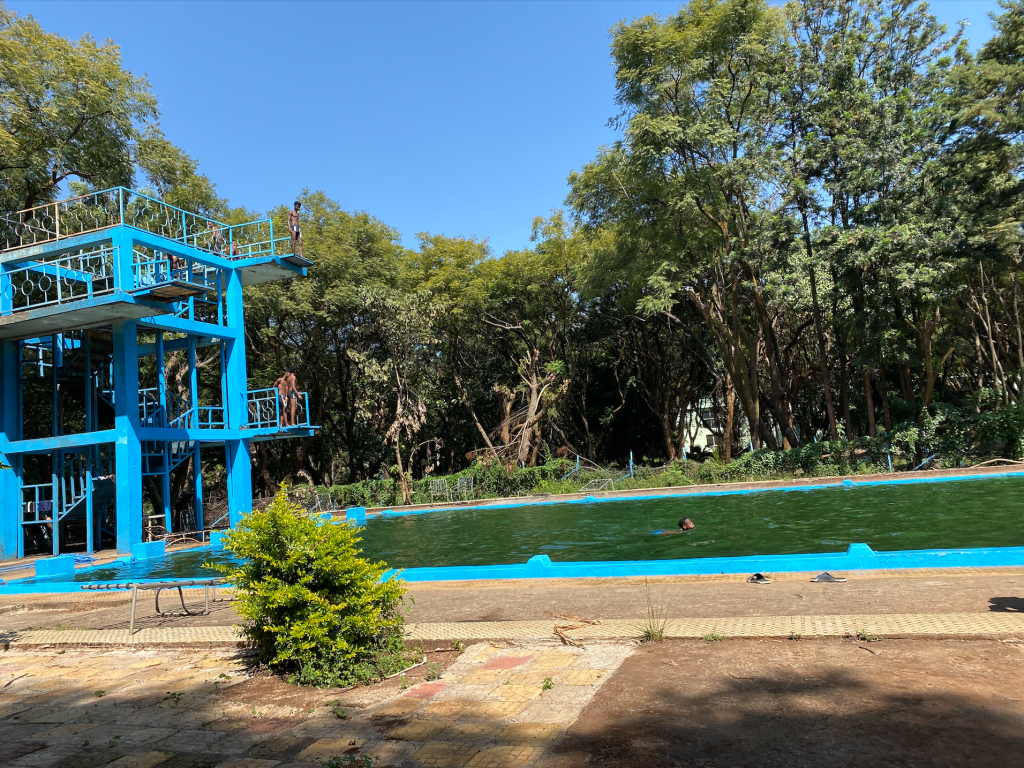
Around a bend, and we heard laughter and the sound of splashing coming from up the hill. We followed the sounds with our footsteps to the right and determined the source of the commotion was a local swimming pool in the center of a public park. No entrance fee, no lifeguards, no anything except a high dive board that a group of locals were enjoying taking turns jumping and flipping off of. Here, we took a break, stopping and allowing ourselves to be in the moment for a bit. Enjoying the diving board just as much as our company without getting wet ourselves.
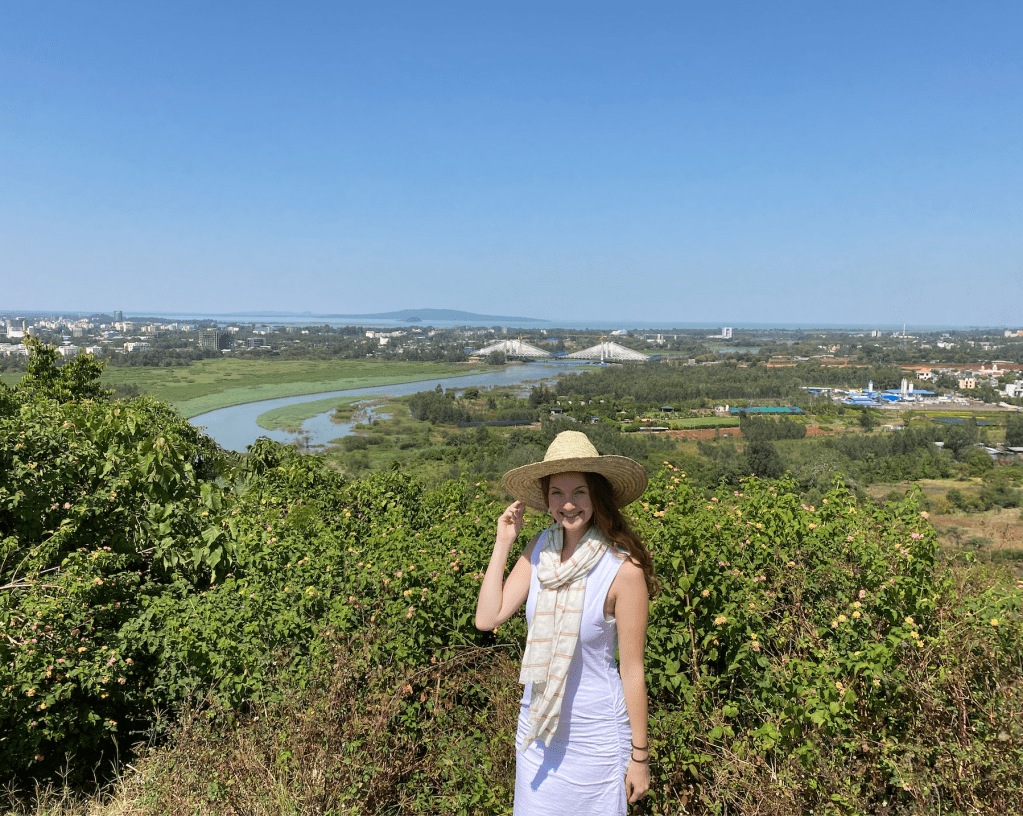
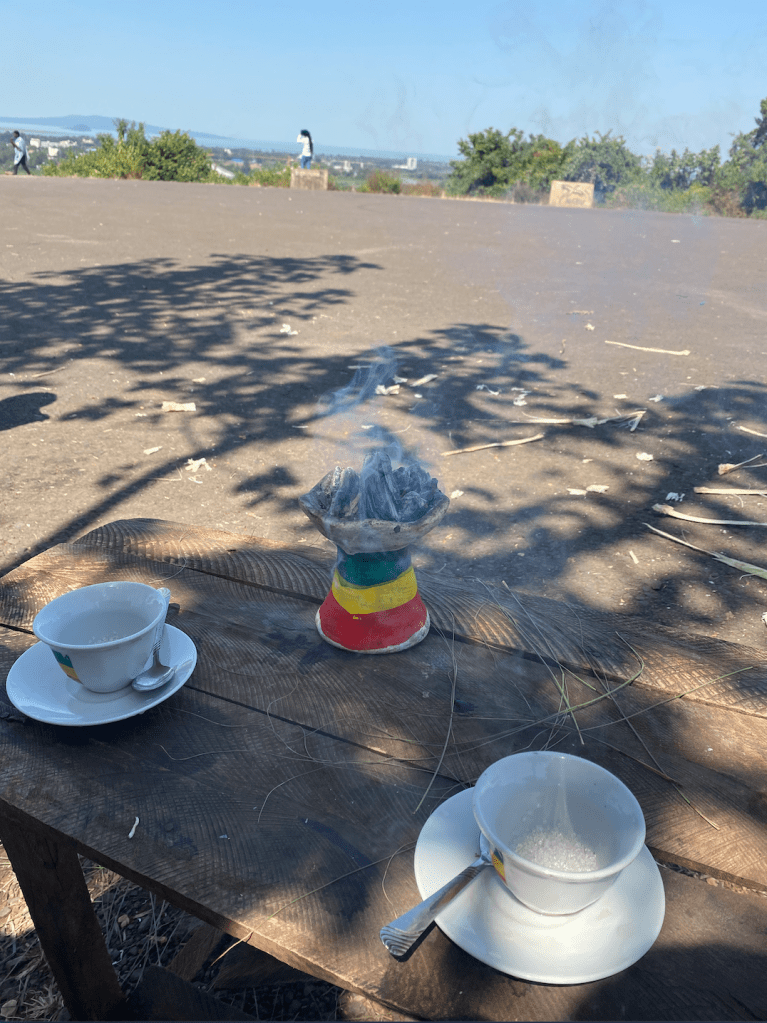
From here, we came back out from the park to the main road in search of a TukTuk (Known as a Bajaj in Ethiopia) that could take us further south-east to Bezawit Hill. From here, there is a little know viewpoint that looks out onto the whole of Bahir Dar and Lake Tana, also offering stunning views of the new bridge that is mid construction that will connect over the Nile River. This hill is also home to a palace of Emperor Haile Selassie, which we confirmed with local coffee sellers is not open to the public due to it’s use specifically for military operations. We spent a little under an hour drinking coffee from a local seller and sitting overlooking the panoramic view below, posing for pictures ourselves and taking pictures of the one other group of individuals who were there during the time we spent on the hill. For a not as popular tourist destination spot, this hill was certainly something spectacular that I wouldn’t recommend others miss during their time in Bahir Dar.
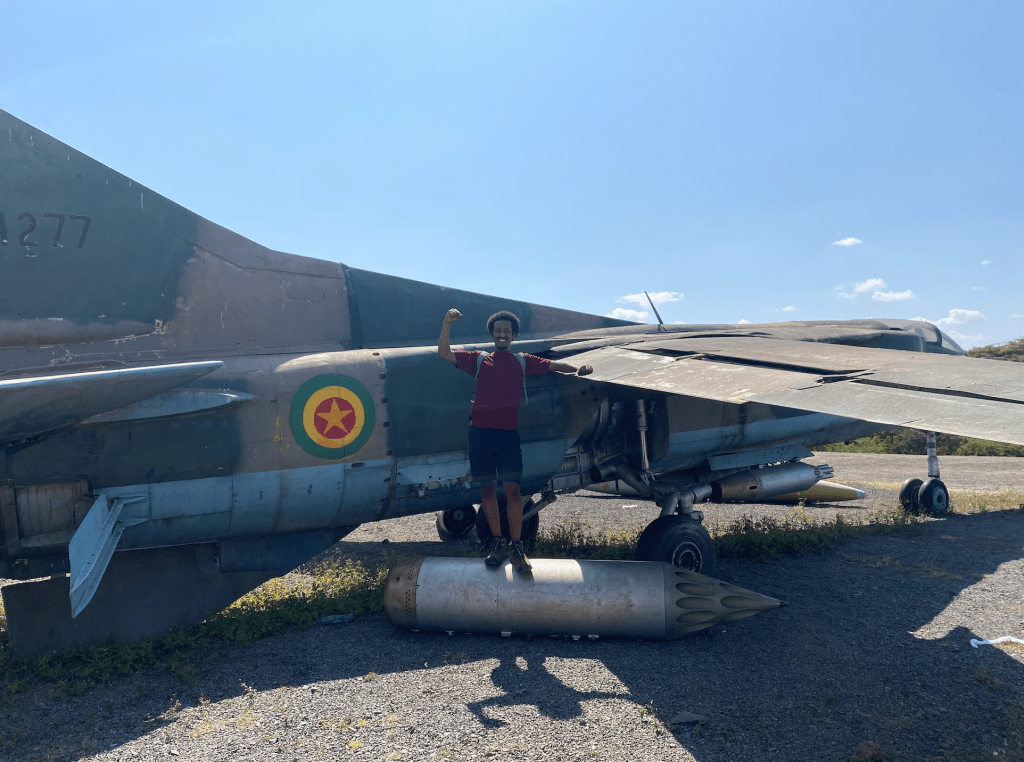
Our last not so basic spot for the day, ended up unexpectedly being the destination we spent the longest in that day. Where I come from, most memorials are worth a 5-10 min stopover to read the plaque and admire their beauty. That is not the case at Martyrs Memorial, which actually should be given a different name in my opinion as it’s really a memorial, museum, garden and historical park all in one. The whole park is dedicated to those who fought against the Derg Dictatorship. in the 1970s. With a resident ID, we paid 20 birr each to enter the park, and without residency a foreigner will pay 100 birr. Immediately what captured my boyfriend’s attention was the large collection of planes, helicopters, and other transportation vehicles that the park contained. He was fixated on each one, rambling about their histories to the extent that we probably spent an hour just outside taking pictures and videos of them. I on the other hand, can sadly only tell you the names of them because of my photo evidence. Besides the fighter vehicles, the park boasts gorgeous green space that students probably from nearby Bahir Dar University were using to study and relax on. If I were to go again, I would probably pack a picnic and enjoy the shaded alcoves of the garden. In addition to the green space, you can also visit the hidden museum in the memorials basement. You do need the admission ticket to get into this museum, although there did appear to be other entrances to the park itself which seemed to not require you to go through the ticket booth to begin with. Finally, visiting the memorial of course involves climbing to the highest point on memorial itself, a huge structure with hundreds of stairs leading up to a viewpoint and large sculpture on top.
So if you’re up for some adventure, and diverging a bit from the mainstream tourist destinations, I recommend taking part in some of these not so “classic” experiences. There really is no better way of seeing a place than by foot, or for part of this trip by local Bajaj, where you can slow down and truly get to see the wonders of Bahir Dar.
 Revealed Travel