Located 127 km from Mekelle, the capital of the Tigray region, are the Gheralta Mountains of northern Ethiopia, home to the largest number of cliff churches in Africa and some of the oldest churches in the world, not to mention the most difficult to access. The Gheralta Mountains are a hiker’s dream, with deep valley’s and towering rock cliffs. While some trails are moderate, others appear quite challenging until you see the local children floating down them with a spring in their step sailing effortlessly to the bottom. Whenever we would ask our guide how long the trail would take us, he would always reply, “it depends on fitness.” Needless to say, it took us longer than any local we passed during our journey.
Guides tell you there are over one hundred churches located in this mountain range, but only 35 are accessible to visitors along hiking routes. And as we learned during our trip, hiking “route” is a loose term. In this blog post I will go through the five churches we visited during our trip, detailing the journey and recommendations for this incredible adventure.
It’s important to note that since the Gheralta Mountains are located between the cities of Axum and Mekelle in Tigray, it is possible to fly into or out of either city. Most tours will recommend you fly into one of the cities and fly out of the other to also experience the attractions in both cities. More about the cities in a different post!
Abraha We Atsbeha

Since we flew into Mekelle airport, the first stop on our itinerary once leaving the city was Abraha We Atsbeha Church, located 15km west of the city of Wukro. We visited this Church the afternoon of our first day as its one of the most easily accessible Churches from the roadside. Only a short climb up some well constructed stairs will grant you entrance to this gorgeous rock church built in the 10th Century to honor brothers and Kings Abraha and Atsbeha (Ezana and Saizana prior to converting) who helped convert Ethiopia to Christianity. Our timing was unique, as locals far and wide were gathering at the Church during our visit. It was explained to us that the following day was the annual holiday for the Church and that locals were here to stay the night and celebrate into the next day.
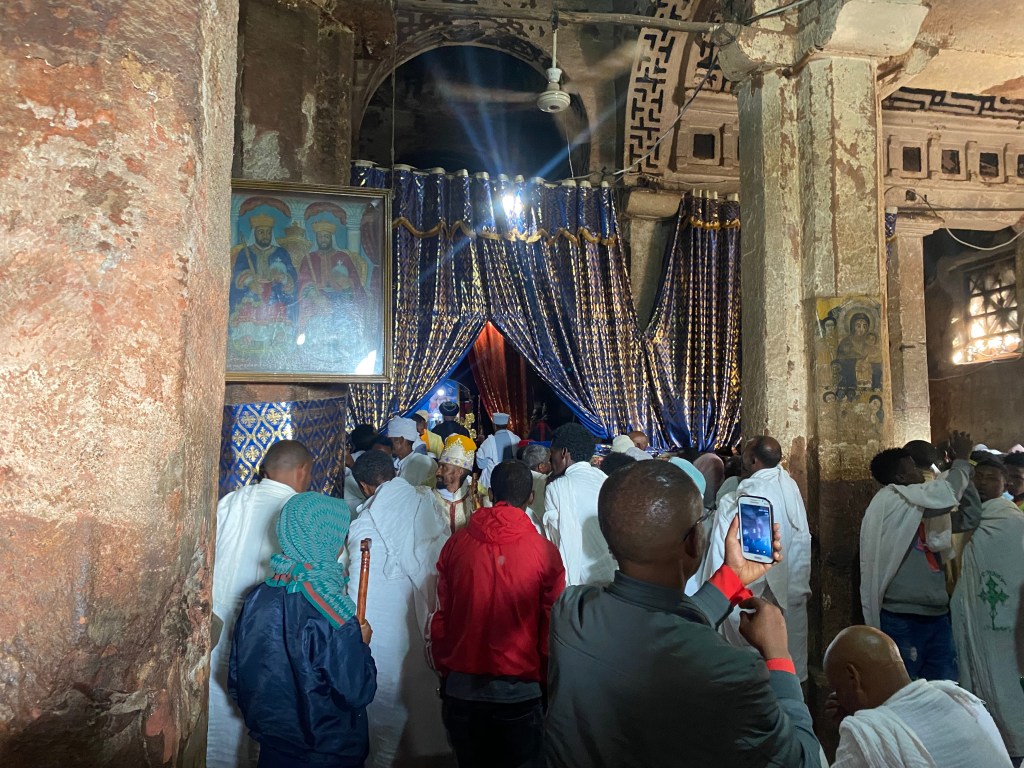
Like all Ethiopian Orthodox Churches, there is a woman’s entrance and a mens entrance to go inside the Church. Once inside you are welcomed by a Priest, who during this particular day was preparing for the services of the evening. Paintings fill the walls, completed in the 16th century and depicting Ethiopian Christian history. There is a small museum you can also visit separately from the Church that has ancient artefacts and relics. We also stopped to take in the incredible landscape views before heading back to our vehicle.
Abune Abraham Debre Tsion
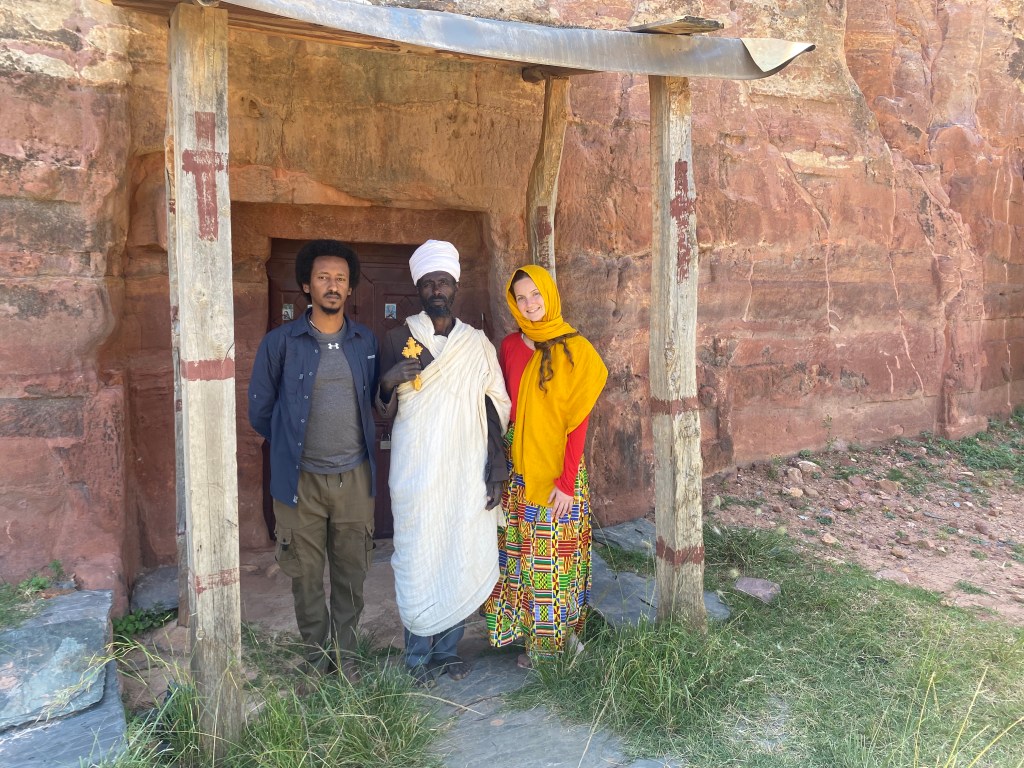
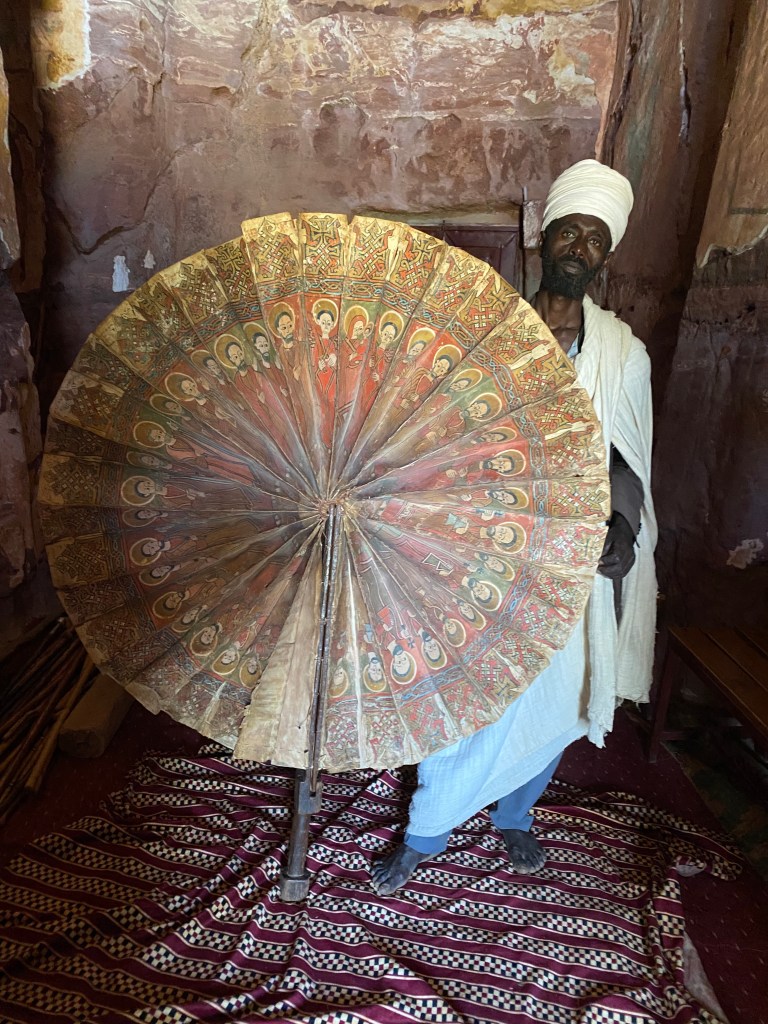
We began our second day with a “short” one hour hike up to Church Abune Abraham Debre Tsion, a Church carved out of a sandstone cliff. It was founded by the monk Abuna Abraham and likely completed during the 13th Century. The climb’s terrain was not bad, but what was, was the morning sunlight and heat. Even though these Churches are at a much lower altitude than Addis, I found myself asking our tour guide what the altitude was because of my exhaustion just halfway up the mountain. Once at the top, you are met by incredible views. Before completing the final walk across the top of the mountain to the Church, our guide showed us what he referred to as a “small cave” that was dug as the start of a Church until Abuna Abraham decided it was not the right positioning for his Church. Something special about this Church is how Abuna Abraham used to communicate. There is a carved window at the Church that points directly to a different Monastery on a separate mountain. Through this window Abuna Abraham used to communicate with other Church Leaders. The Priest also showed us an ancient fan that depicts Christian history.Another unique aspect of this Church was the rooftop. Originally, the Church was completely framed in stone, but in more recent years locals had waterproofed the top using water resistant metal and cement on top to ensure that rain would not leak through to the inside.

Maryam Qorkor & Daniel Qorkor
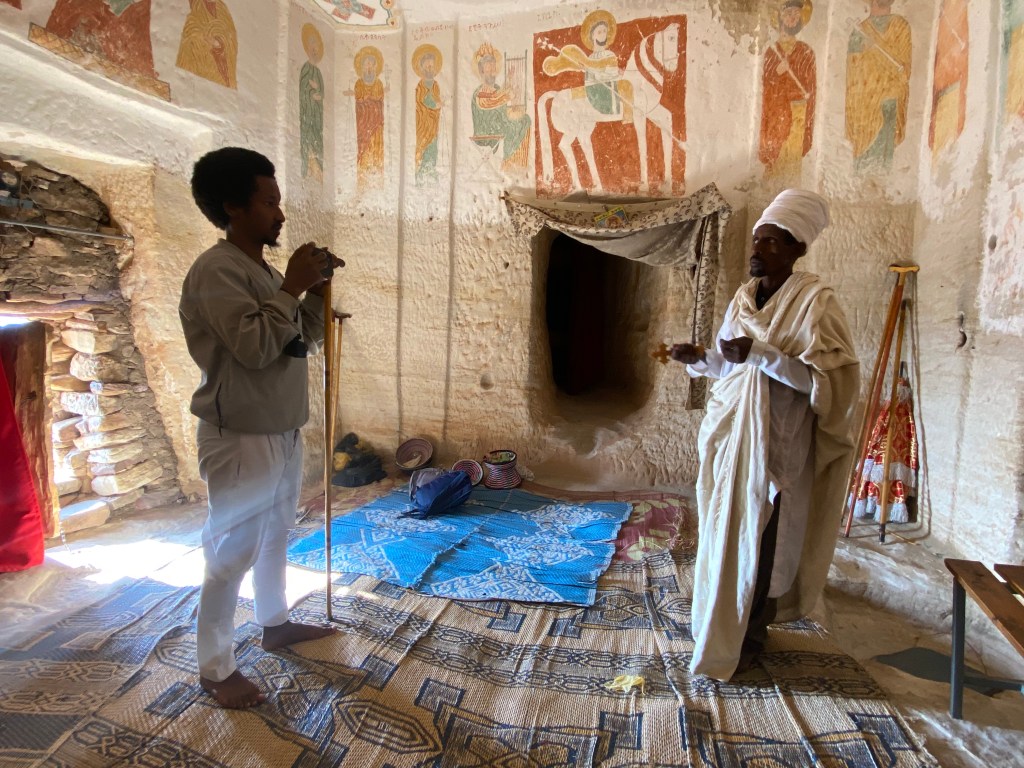
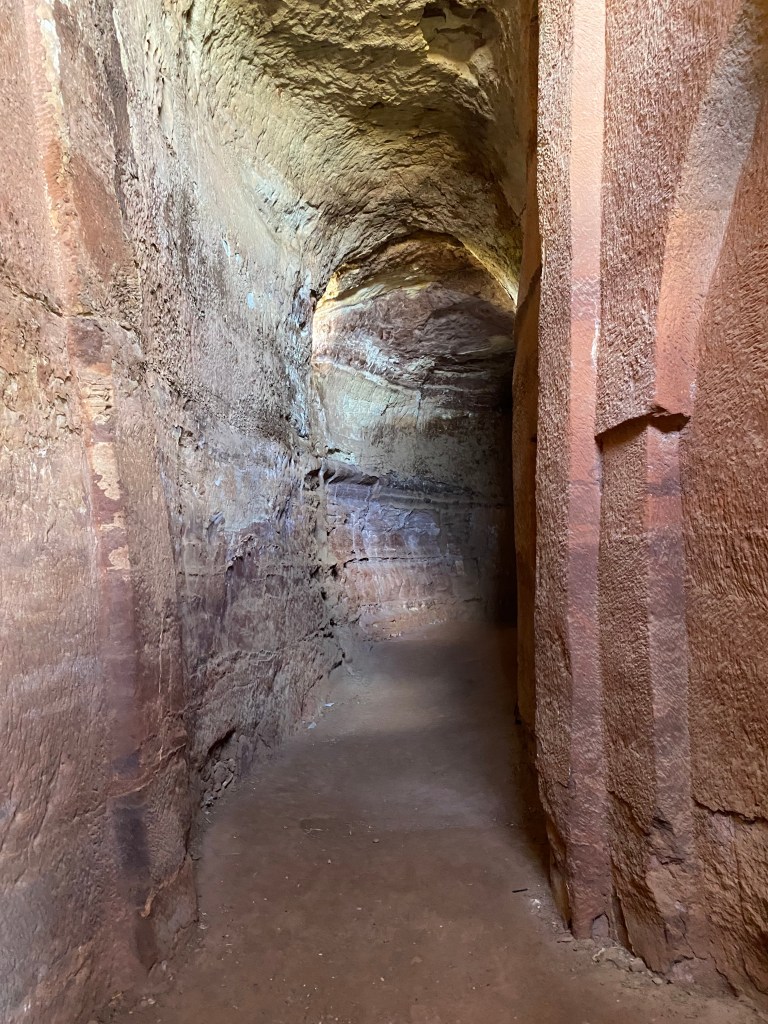
Although we did not step foot in these Churches until Day 3, we began our accent on the afternoon of Day 2. We elected to do an additional day of touring in the mountains specifically so that we could have time to camp at the top of the mountain from the viewpoint of these Churches. This was actually recommended to us from our colleague and friend who recently did this trip and told us if she were to do it again she would add this to her itinerary (shoutout to Ciara if you’re reading this!) I’ll post more about the camping experience in another post, but in short, I would highly recommend staying at the top of the mountain. On our climb up, we passed the Priest walking the other direction towards home. He stopped briefly and chatted to us asking if we would be visiting the Churches that evening- because if we were, he would need to go back up which would be some additional work. We politely declined explaining how we would be staying at the top, and he went on his way. It wasn’t too long after that another group of tourists crossed our path who requested that the Priest come up to show them the Churches. We arrived at the Churches roughly at the same time that the Priest did . . . taking us close to 2 hours of hiking and him seemly less than 30 minutes. By the time we arrived, we were winded and the sun was beginning to set. We took some quick photos at the peak of the mountain with the sunset, and then settled in for the night.

In the morning we visited both incredible Churches, Daniel Qorkor on the side of the mountain accessible by walking delicately near the cliff and Maryam Qorkor on the other side partially sticking out of the rock as a way to again protect the Church from the rain. Daniel Qorkor was the smallest of the Churches we visited with white paint and beautifully painted walls. The Priest told us stories of the painting and a smooth, flat gray rock that Aba Daniel used to stand on to feel discomfort.
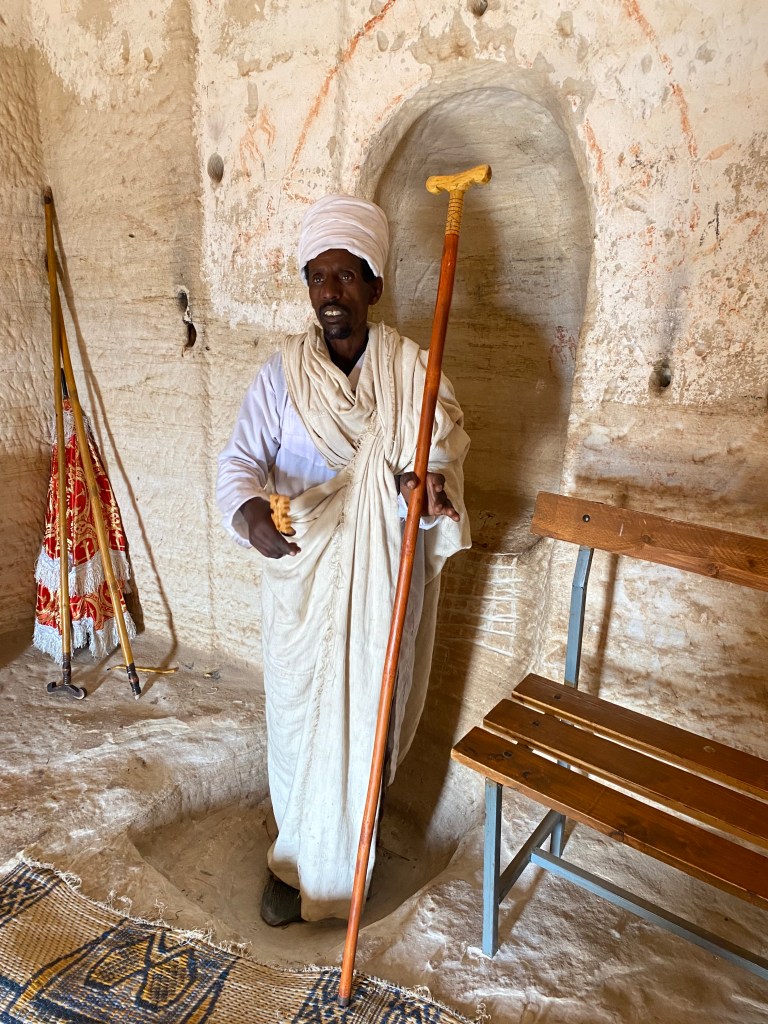
Maryam Qorkor Church was much larger. The Priest told us stories of how in ancient times leaders in the Church who wanted to be laid to rest in the Church could in its walls. Sure enough if you look through the sides of the Church you can see skeletons through the holes of the cave. Both Churches are known for their miracles, bringing blessings to local families who come to ask for children among other wishes.

We left Daniel Qorkor and Maryam Qorkor Churches in mid-morning on an adventurous walk down the hillside on a route stated as “only for tourists” by our guide. I’m not surprised it was only for tourists since there really wasn’t much of a route at all through the brush to the other side of the mountain range, but regardless it was a memorable experience.
Abune Yemata Guh
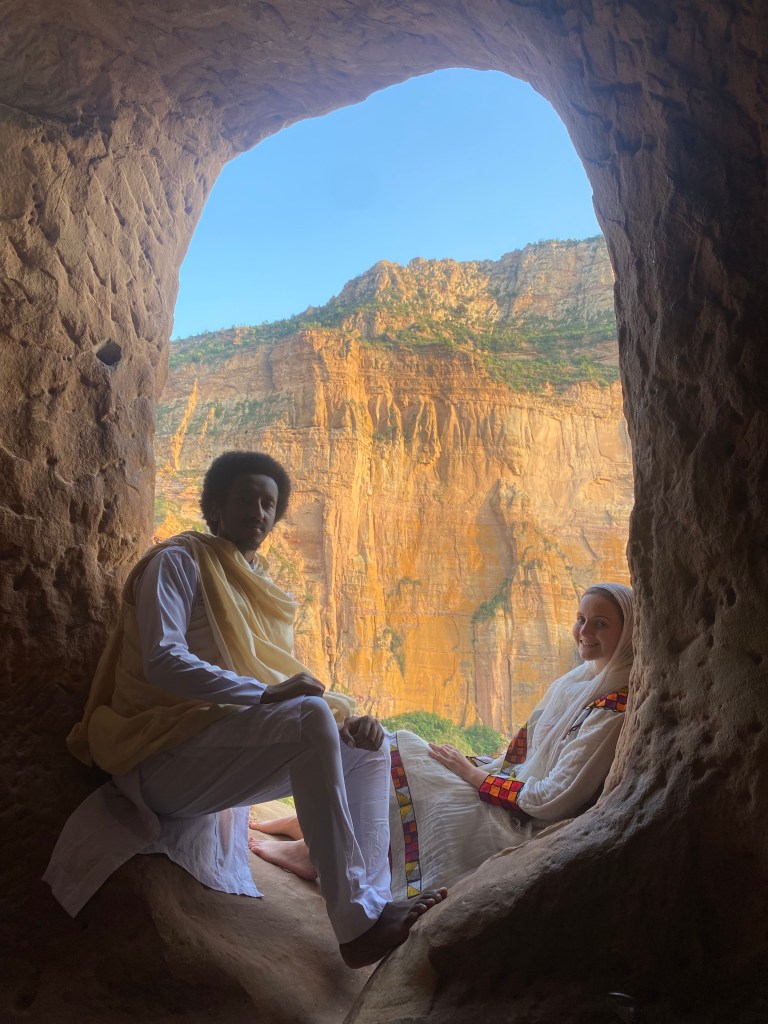
When we finally reached the other side of the mountain range, it was decided (for us because we were utterly exhausted) that we would take a break for a rest and to eat some lunch. We stopped at a lovely home at the base of Abune Yemata Guh owned by a local Priest, Aba Kidane Miriam and his family. They were incredibly hospitable, having mattresses ready for us to rest on and a freshly prepared lunch of shiro and injera. We learned that a reason for their amazing hospitality is because their home is actually a Campsite/Homestay that you can stay at overnight. The name of their place is Abune Yemata Campsite- I’ll add more details of how we came to stay the night with this amazing family in the next blog post, but for now it’s important to know that we got the proper fuel to help us through our last hike of Day 3- up Abune Yemata Guh, known famously as “the Church in the Sky” and also known as the most inaccessible Church in the world.
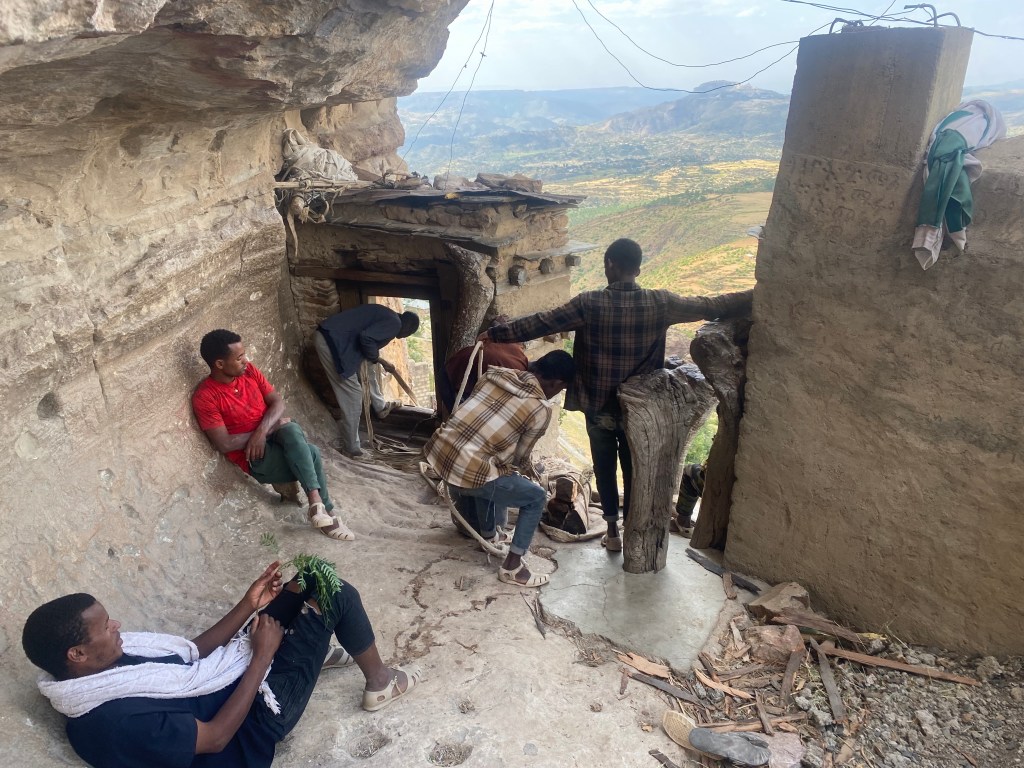
It is not a long hike to the top of the mountain, maybe around an hour up, but it is a straight up climb. So straight up in fact that when you get halfway up, you are met by a number of scouts who’s purpose is to help you safely up and down the mountain. There is a section where they ask you if you’d like a harness to which my immediate response was “yes!” I was the only one in the group to use the harness . . . and have no regrets. It was already scary enough! Once at the top you feel some relief until you realize that the hardest part, physically getting to the Church itself is yet to come. To get to the Church, you need to walk on a small rock ledge, carefully placing your hands and feet in appropriate slots along the rock cliff. Guides help you and make it look effortless on all sides of you, while if you’re like me, you’re shaking. According to the scouts and the Priest, no one has ever fallen.
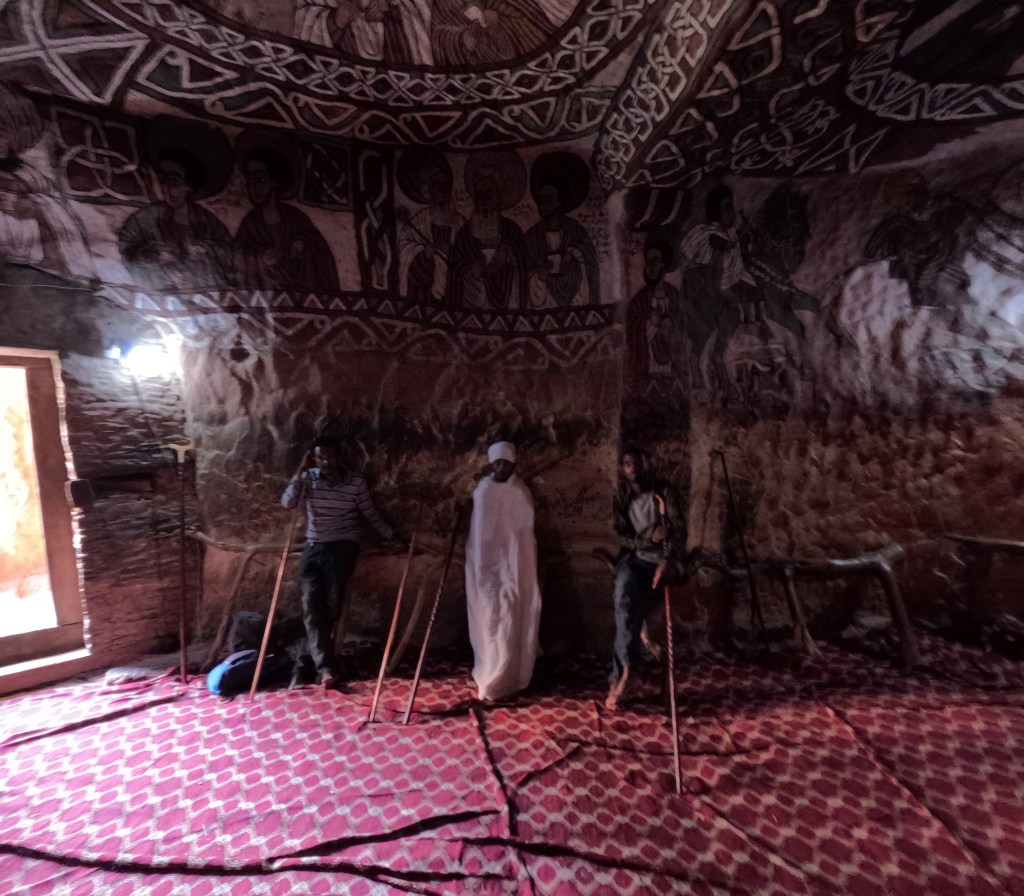
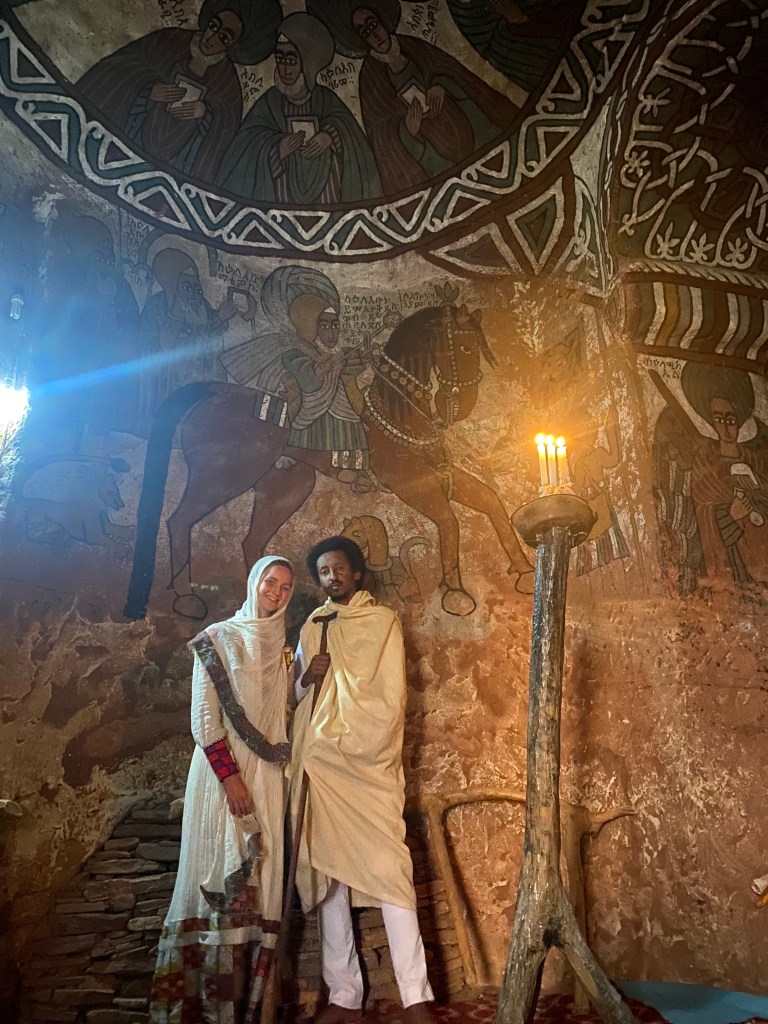
Finally we made it inside the Church and enjoyed a rest on the rugged carpets and learning more about the Church’s history . The Church was created in the 6th century to honor one of the nine saints, Abuna Yemata. The paintings inside the church are centered around the nine Saints and Twelve Apostales.
Debre Dammo
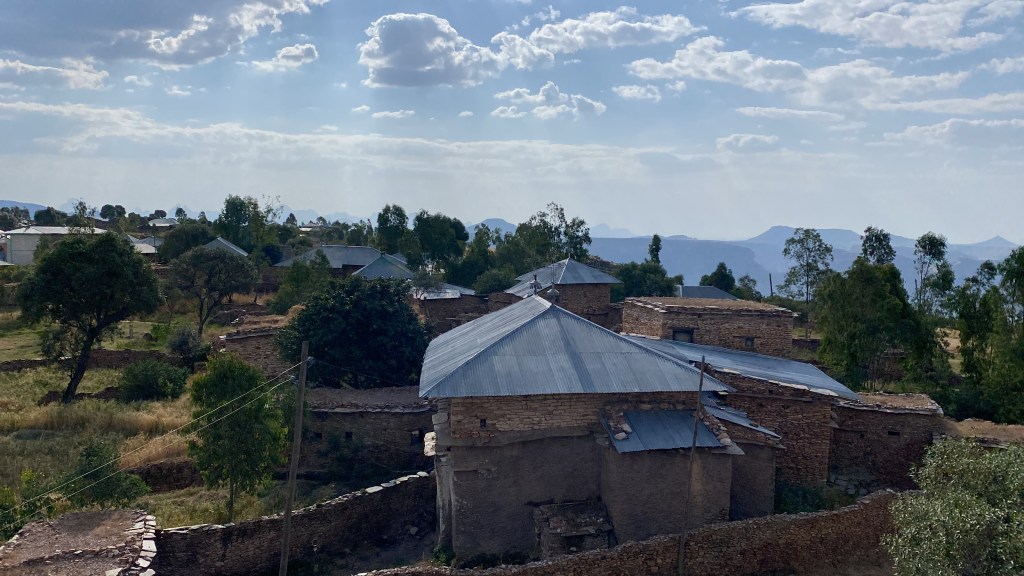
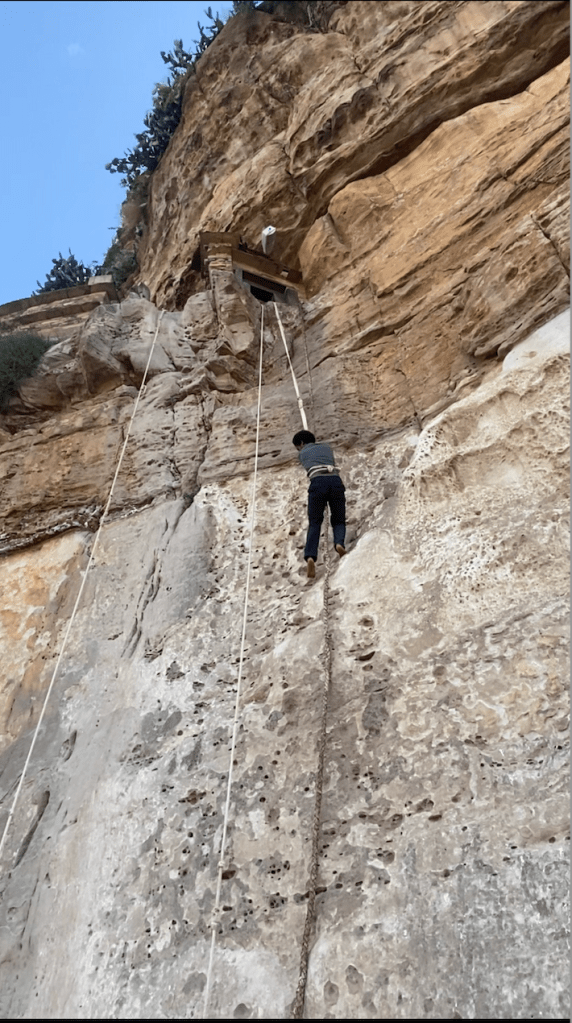
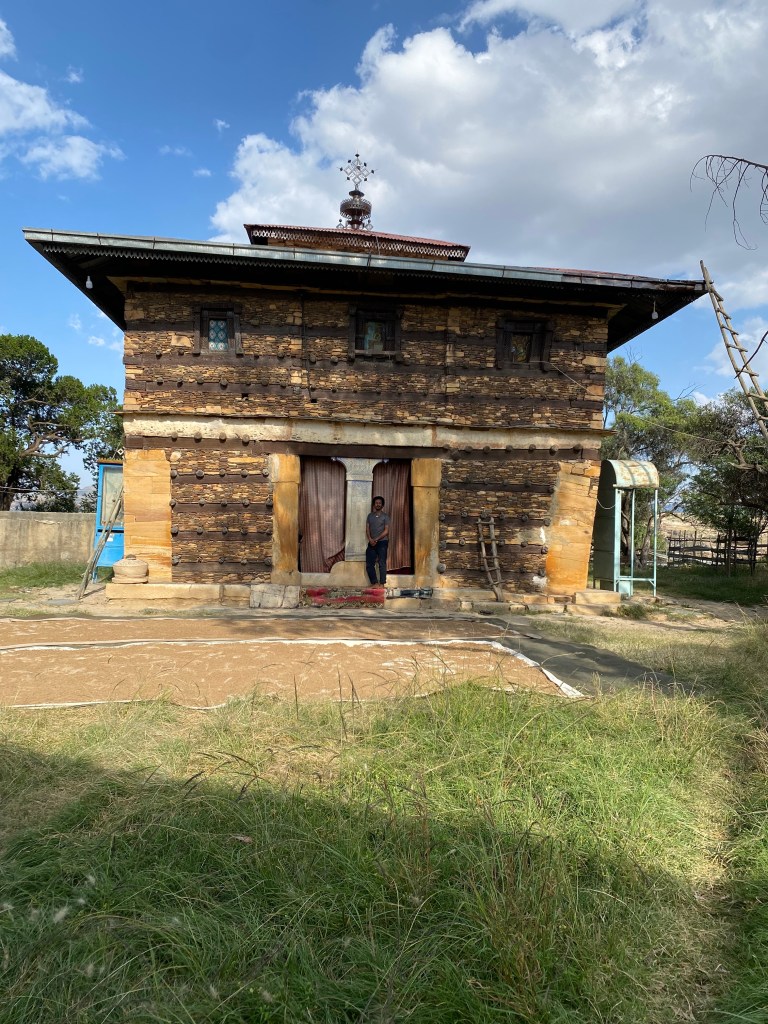
The last Church, or rather Monastery with a Church at it, that we visited was Debre Dammo on our fourth day of travel. Since this Monastery is further North, (and technically not in the Gheralta Mountains) we visited it in the middle of our roadtrip to the city of Axum, a three hour drive from Abune Yemata Guh. Debre Dammo is a Monastery only for men, a community of roughly 300 monks and apprentices living there, living simply and never leaving. Women are not allowed to go further into the compound than the entrance. Even if woman were allowed in though, I’m not sure I would have been able to get inside since the only entrance to the mountain plateau is by a leather rope and vertical 80 ft cliff climb to the top. Yishak was able to visit and took the pictures shared in this blog, whereas I took in the scenic sights of the town below and the Eritrean border visible in the distance. Debre Dammo was founded by Abune Aregawi who went around the mountain three times and couldn’t find a way up. The story goes that after praying, Abune Aregawi was met by a large snake sent by Archangel Michael, who lifted him up and brought him to the plateau. The leather rope people climb to get up is a symbol of this past.
 Revealed Travel