Despite growing up in a household that prided ourselves on the variety and authenticity of the foreign foods we tried, there are certain cuisines that never made their appearance in our rounds. A quick google search into Bosnian restaurants in the Boston area is an immediate indicator as to why this was the case. Eastern European cuisine often gets clustered together, disguised as “mediterranean food” where the emphasis is on “mezze shareable” or a restaurant advertising broader regional dishes. These wouldn’t necessarily be incorrect accounts, as Bosnia and Herzegovenia’s heritage thrives from its mixed cultural backgrounds due to its unique historic influences of both the Austo-Hungarian and Ottoman Empires, however it wouldn’t be a full-picture either. A recent search lead me down the “reddit rabbithole” where Balkan hopefuls discussed the lack of options in the Boston area, pointing to a singular food market and annual festival where they’ve been able to find their favorite dishes.
It’s hard to miss something you never knew existed. The risk of reading this post is that you might discover something you want to try, and then have no avenue of which access it. Unless of course, you’re planning to hop on a plane to Bosnia, which in that case I would highly recommend continuing to read this post and live out your grandest Bosnian adventures as it is sure to be a trip of a lifetime!
- Pita ~ Burek, Sirnica, Zeljanica, Krompirusa and More
Whether you’re grabbing your pita (pie) with tongs off the grocery store pastry shelf, or getting it served hot and cut fresh from the tray at a specialty shop, filled pitas are a must-try for any traveler across the region.
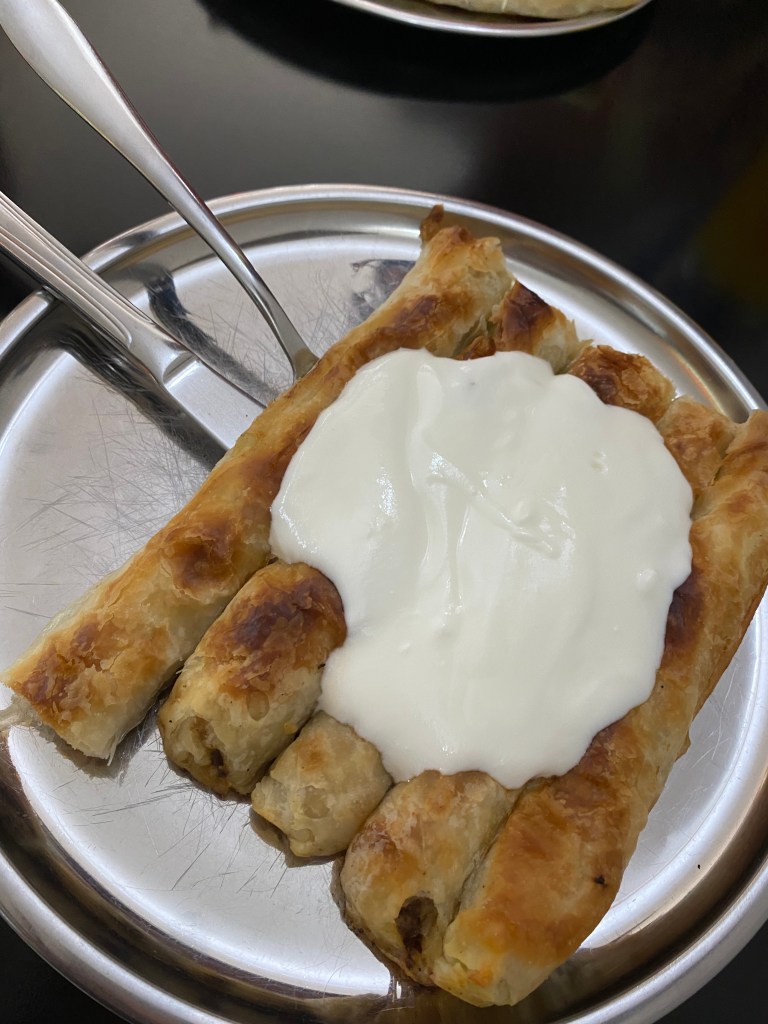
The first time I tried Bosnian filled pies, was from a little bakery shop (unfortunately I don’t have the name) on the edge of the town in Mostar from a man who spoke no English. Instead of relying entirely on me and my poor pointing skills, he needed to ask the person behind us in line which pie I wanted. At this shop, it wouldn’t have mattered which one I ended up with. Every bite was delicious, perfectly flakey with a crunch and seasoned with balanced ingredients. It wasn’t until a few days later that I truly understood how elaborate the filled-pie scene is in Bosnia.
In the US, you’d expect to see an ingredient listed next to a filled pastry that indicates what’s inside, in Bosnia it’s all in the name itself. There are so many names and so many varieties, than memorizing all of them seemed like learning the language entirely, so instead I focused my mind on the most common- Burek, a meat-filled pie, seasoned with onions.
I’m still not confident that I would order the correct thing if I walked into a shop today, so rather than try to explain each, here’s a little summary for the post popular types of pasteries:
- Burek: Hand-stretched thin dough (jufka) rolled into a spiral and filled with spiced minced meat (beef or lamb) and onions.
- Sirnica: Filled with a rich mixture of fresh cow’s cheese, sour cream, and eggs.
- Zeljanica: Filled with leafy spinach, soft cheese, cream, and eggs.
- Krompiruša: Filled with finely diced potatoes and onions
2. Crevapi
Originating in Serbia in the 19th century, Cevapi is considered one of the national dishes of both Serbia and Bosnia Herzegovina. During the World Cup this past summer, people were comparing that Cevapi is to Bosnia that of which the burger is to the United States. And just like burgers in America, you can get really good Cevapi, and just okay Cevapi, but it’s pretty difficult to get a bad Cevapi. Cevapi is sold around every corner in Bosnia’s capital city of Sarajevo. It was a must try food shared to me by my mom’s colleague who is from here, and gave me a list of a few of her favorite places to try it at. I had my first Cevapi from a place called ” Fan Ferhatovic” and was not disappointed.
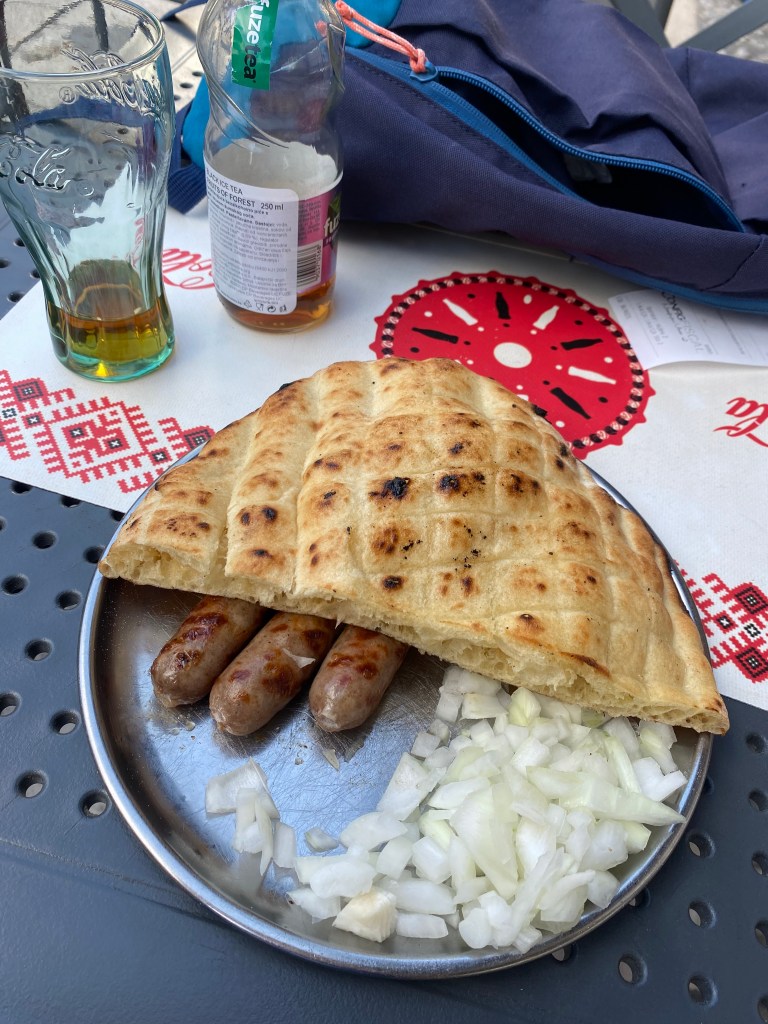
This was the first of a few Cevapi’s I had on this trip, and definitely the best I experienced. When I think of what made it stand out, there’s no better way to describe it than by it’s simplicity. The bread was light and just the right amount, the sausages had deep flavor and cooked just enough, but not overdone. And the dish was finished with some chopped onions. That simple, and really that delicious.
3. Klepe (Bosnian Dumplings)
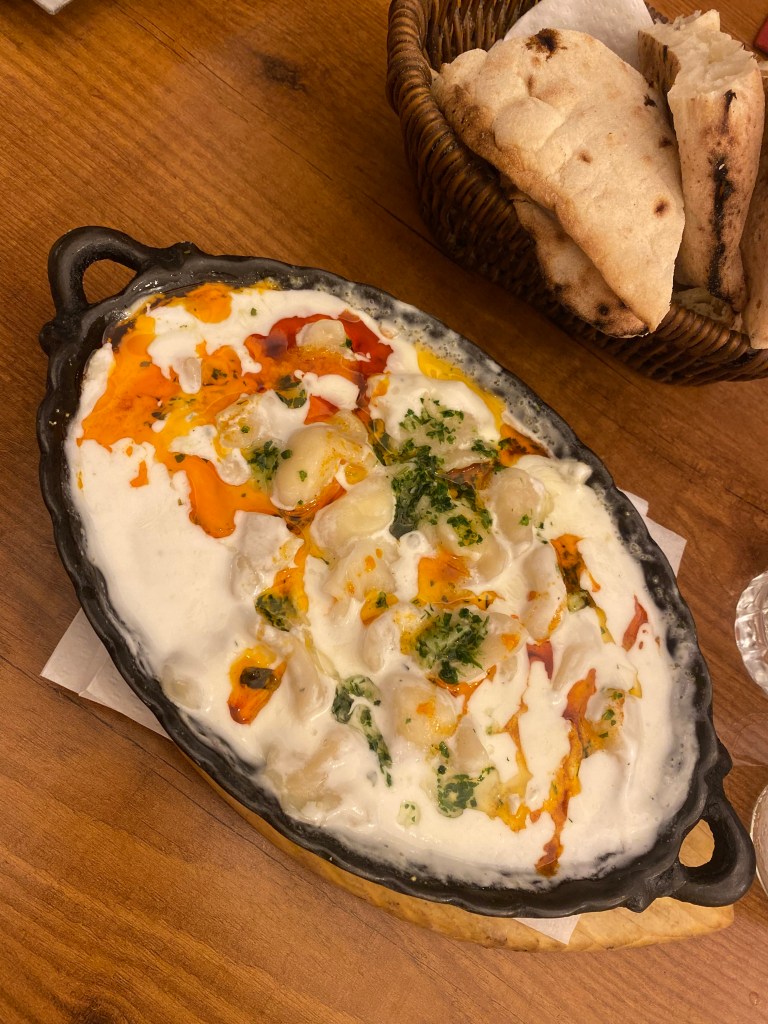
This dish was a surprise in every sense of the word. From not knowing exactly what was going to come out on the plate, to the combination of ingredients being the perfect mix of creme and sharpness from the spices, I’d add it up to nothing less than a glowing success. I would have made this dish the first one on the list if it weren’t for the popularity and shear accessibility factor of the two dishes prior.
Klepe is a dish that I had done a bit of research on. Fresh off my travels to Rome, Italy where I had seen my fair share of pastas, and being met strictly with meats and doughs in Bosnia, I was curious if there was such thing as a Bosian pasta. It’s not that klepe was hard to find in Sarajevo, however a traditional klepe includes seasoned meat inside and my friend, who is a vegetarian, and I decided we would try to find a vegetarian version. Nanina Kuhinja was our answer! They had both traditional meat filled klepe and a cheese-filled version (pictured below).
If you look up traditional dishes in Bosnia, you’ll find an extended list. The above is a little taste if you will of what the country has to offer. There were many exciting dishes I didn’t have time to explore, and that’s okay because I like to think of food travel in the same way I think of going to new locations, if you like something enough you will go back to it. It’s what keeps me going, there is always a reason to come back.
 Revealed Travel