There’s a unique feeling that comes with visiting an ancient city. When you look around to a life vastly different from your own. A life that cannot be discussed by how many centuries ago because the difference is better formulated in our minds through a sweeping imagination than anything else.
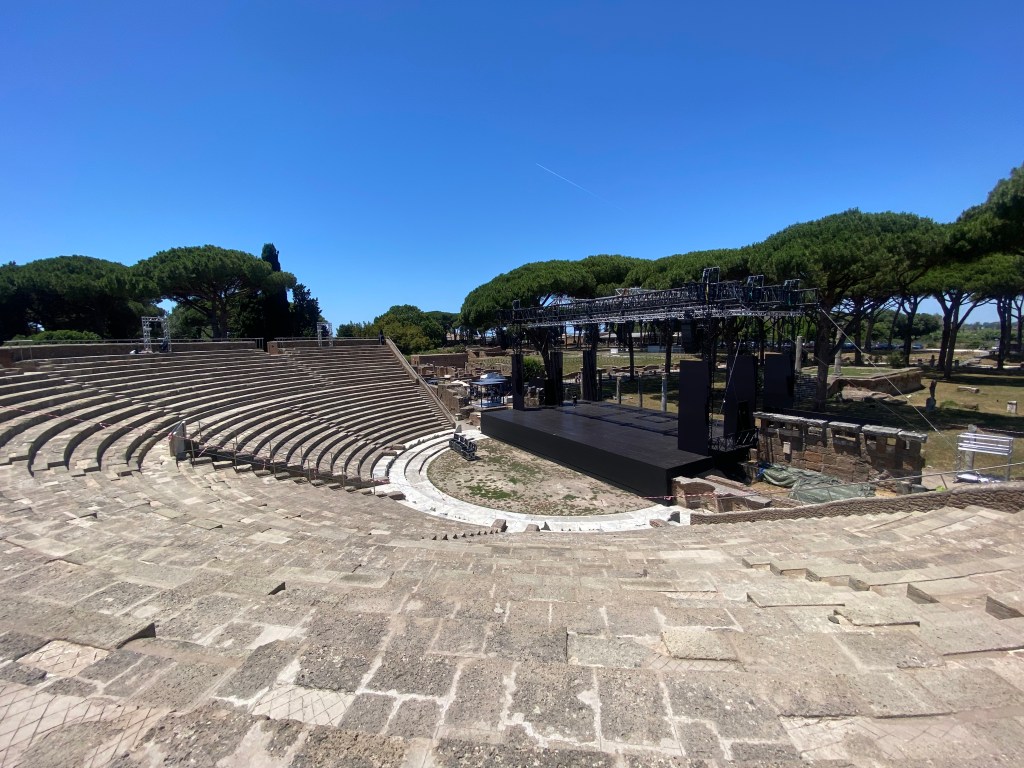
Rome began as a small settlement in 753 BCE: that is over 2770 years ago. Today, it’s one of the largest tourist destinations in the world. Ruins line street corners, signage seeking to educate those who roam the streets on its vast history. You turn a corner, and between the columns you notice a construction project, workers with metal bars setting up a stage, a modern concert venue set between the history. This parallel is the fabric of Rome. A little old, a little new, meeting in a busy world where hopefully people are taking the time to stop for a moment from all the rushing to “see it all” to just appreciate the complexness of time.
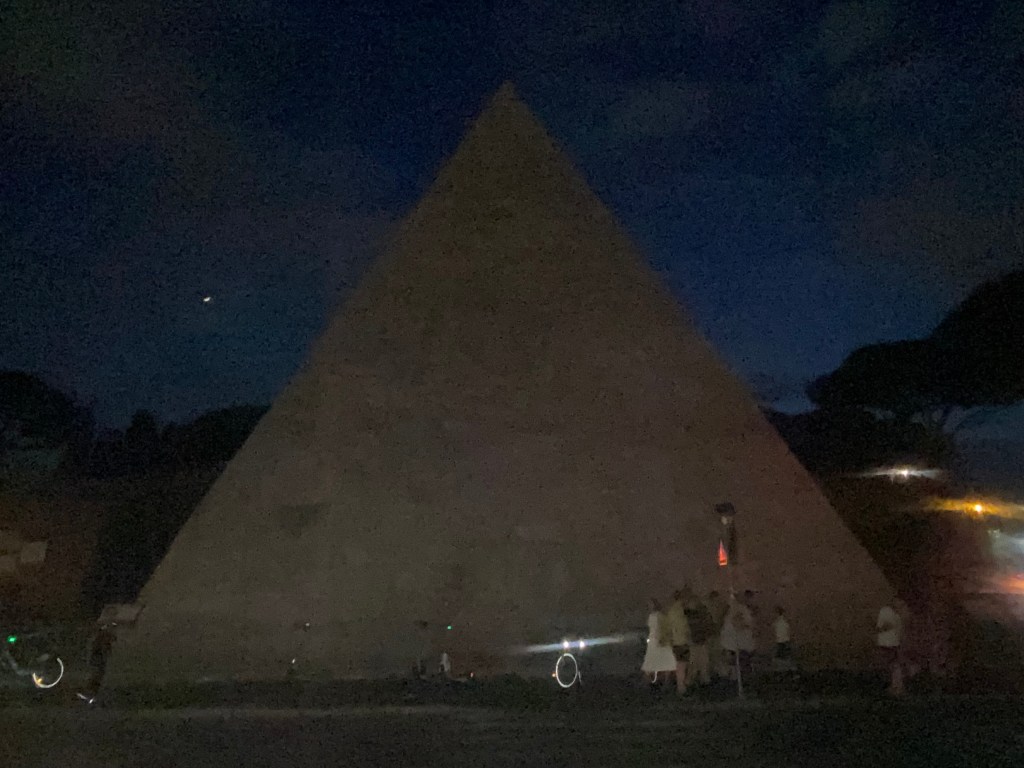
You can spend a week in Rome, and your imagination may not settle on how life was so long ago. But take the train just 30 minutes out from the city towards the coast, and you’ll find the port city of Ostia, and the archeological site “Ostia Antica.” We took a day trip here, heading on a direct train line from central Rome at “Piramide Station” and getting off at the “Ostia Antica” stop.
Here you pay an entrance fee of 18 euros and step inside a true ancient city. It feels like you’ve been transported, 2400 years ago to Ostia’s prime as a port city supporting trade into the broader Rome. I’ve heard Ostia be compared to the impressiveness of Pompeii (though I cannot make this claim myself having not been to Pompeii) but at a fraction of the distance. The city is well preserved and extensive, a site that can keep someone busy for 3-4 hours of walking easy! It certainly kept us busy.
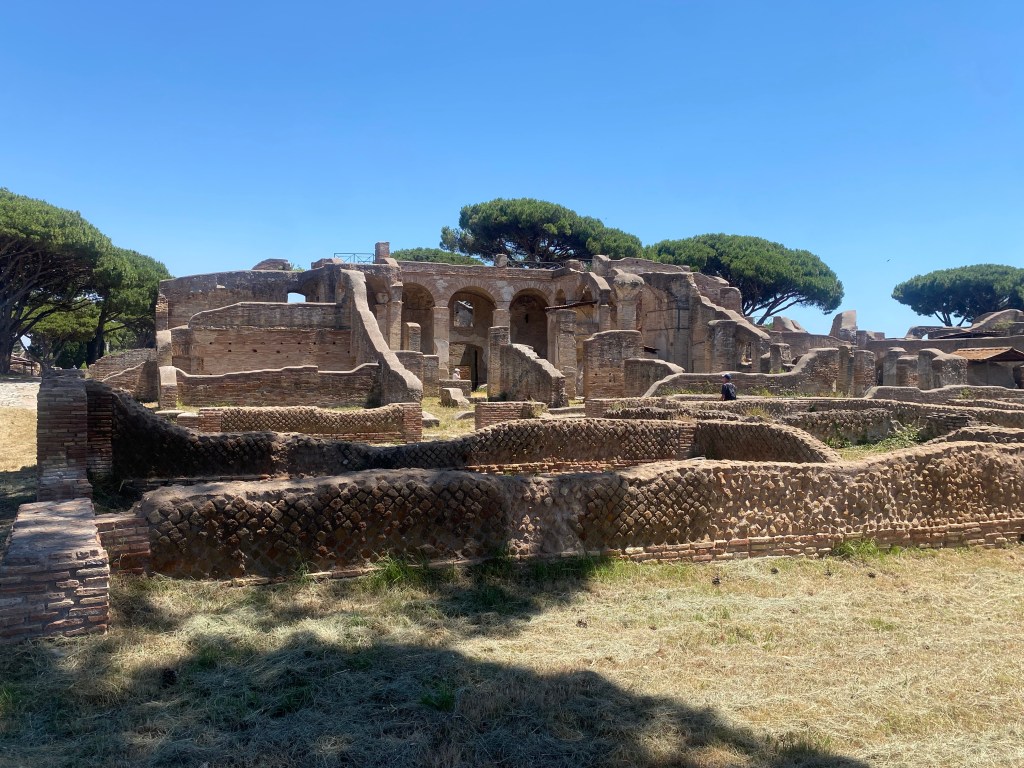
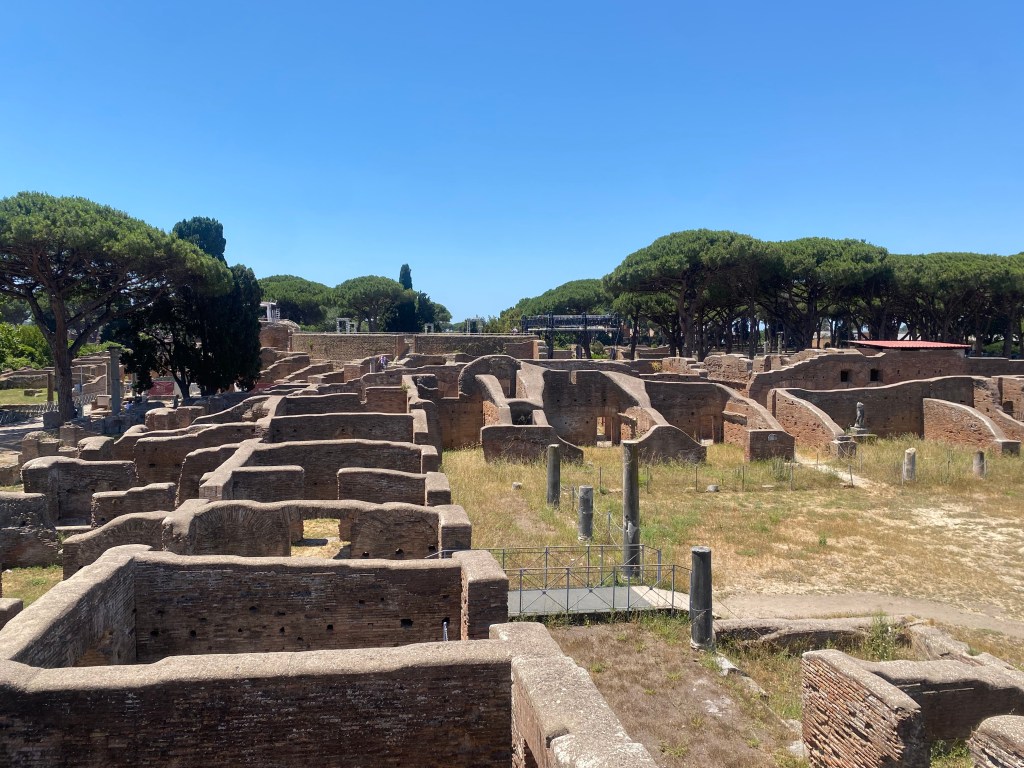
What’s special about Ostia Antica, is you can picture it. You step foot inside the archaeological site and instantly you’re encompassed by the past. You can picture the hustle and bustle of the market square, imagine civilians gathering at the forum, and wonder in awe as you sit at the top of the colosseum. In each of these places, only a scattering of tourists, if carefully timed, no one- just you. On each of the signs, there’s a photo showcasing what that areas of the city once looked like, helping tourists understand the areas they’re walking through. We loved Ostia because you could see the whole city in one afternoon, and be present throughout the exploration. No crowds, no rush, just time to be part of the past.
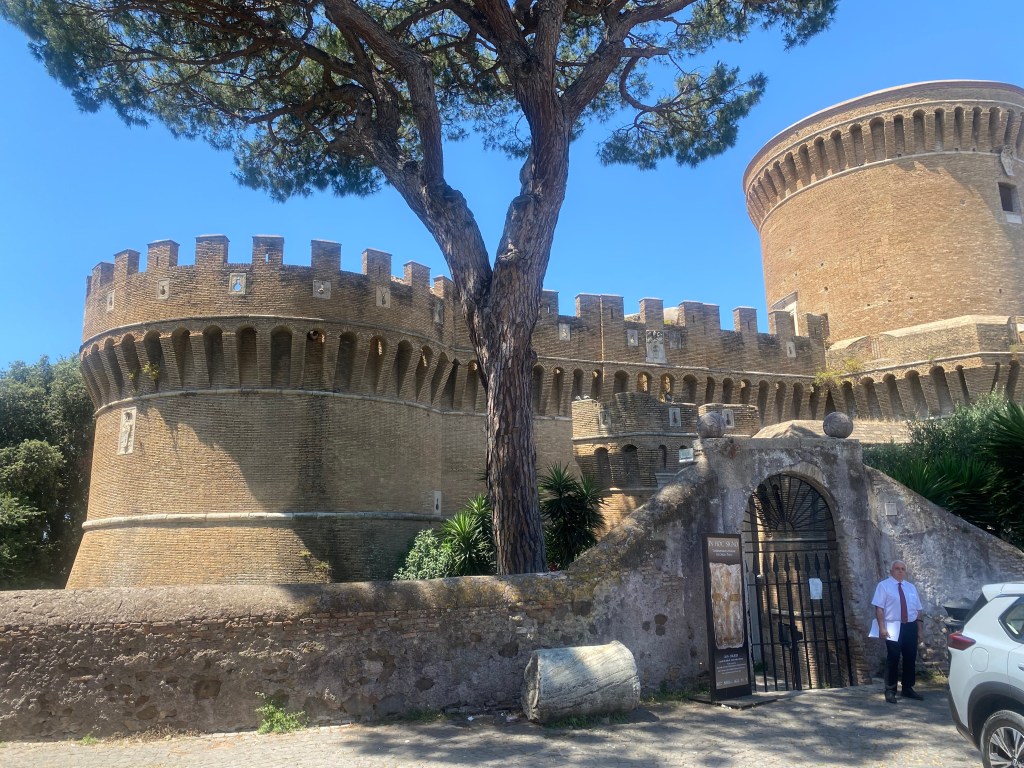
Ostia Antica is primarily popular for this archaeological site, but forget to leave time for some exploring in the town and squares surrounding it. Just outside the entrance, you’ll find Castello di Giulio II, a castle turned ceramics museum that opens onto a quaint little square. We were lucky enough to get a quick glance at an Italian wedding taking place at Cattedrale di Sant-Aurea before leaving. Behind this square is the Piazza Ravenna where a number of bistros serve scruptious fares. We ate at Drusilla Al Borgo which specialized in an assortment of flatbreads, salads and pizzas.